
Some homes impress you.
Others let you breathe.
While some make you question a person’s sanity.
Organic Contemporary design does the second.
I have walked into homes where the finishes were expensive, the lighting dramatic, the stone bold. Everything technically “right.” Yet the space felt tense. Overworked. Like it was trying very hard to be something- it wasn’t.
Just off.
Then I step into an Organic Contemporary space, and something shifts. My shoulders drop. Conversations feel quieter. The room does not demand anything from you.
It simply exists.
That is not accidental.
Organic Contemporary is what happens when contemporary design softens its edges just enough. Clean lines still matter. Structure still matters. Proportion absolutely matters. The difference is warmth. Texture. Like kindness and humility are layered right into the architecture.
This style understands that a home should feel lived in, not displayed.
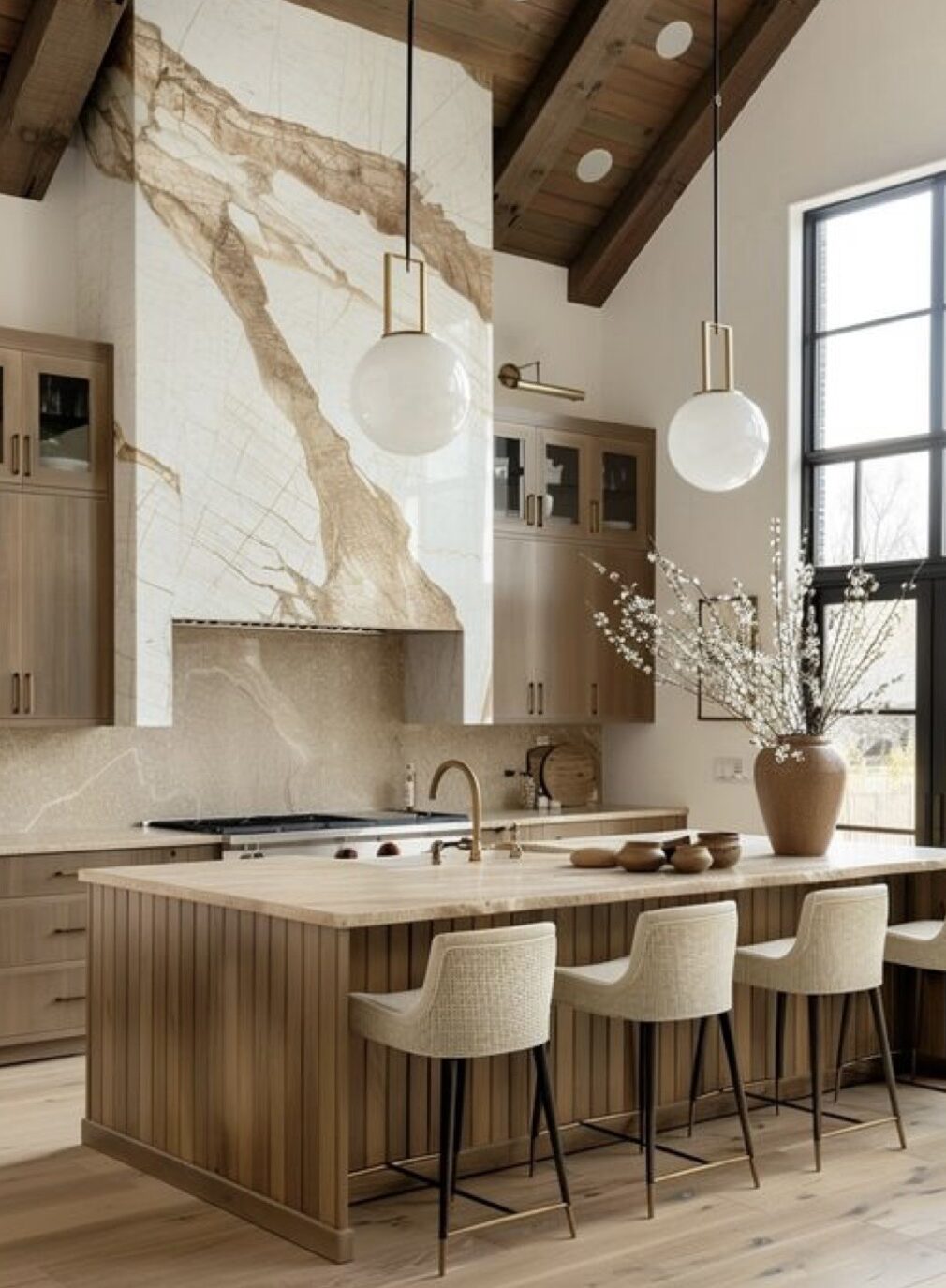
The palette sets the tone immediately. Soft whites. Creamy taupes. Warm sand tones. Earthy muted greens that feel like they came from the landscape outside the window rather than a trending Pinterest color forecast. These hues do not compete. They cooperate. They create a visual exhale.
They breathe.
Quiet is powerful. Have you ever noticed? Quiet wins the argument— if you don’t know, you must not be married. It took me a minute. While Katie never needed one!
Once the color settles the room, the materials begin to speak. Quartz with veining that whispers instead of shouts. Wood that shows its grain and a story. Porous concrete that feels grounded and safe. Linen upholstery that wrinkles slightly and reminds you it is real, and there is beauty in imperfection.
Texture does the heavy lifting here.
High-gloss finishes can be stunning. Sharp contrast can feel dramatic. Organic Contemporary chooses depth over drama. It relies on materials that age gracefully and finishes that develop character rather than fatigue. Wood deepens. Stone softens. Quality becomes more apparent over time.
There is something reassuring about that kind of evolution.
Fixtures follow the same philosophy. Brushed gold. Brushed brass. Rose gold with warmth rather than glare. These metals catch light quietly. They glow instead of sparkle. Luxury in this context feels accomplished, not flashy.
Restraint is where this style earns its credibility. Spaces are edited. Intentional. Nothing feels crowded. Nothing feels sparse. Negative space is treated as part of the design rather than leftover square footage. This is complex. This is hard to get just right.
Minimal does not mean empty.
It means chosen.
I have watched buyers walk through homes designed this way. They slow down. They touch surfaces. They linger. There is less commentary about finishes and more conversation about how the space feels. That reaction tells you everything you need to know.
Organic Contemporary works because it is rooted in materials that have anchored homes for centuries. Wood. Stone. Natural fibers. Those elements connect us to something familiar and permanent. Clean architectural lines give them structure. The balance feels steady.
Steady design tends to age well.
Organic Contemporary is not about perfection. It is about intention. It is about creating spaces that support daily life rather than compete with it. Homes that feel calm on a Tuesday afternoon, not just impressive in listing photos.
True sophistication rarely announces itself.
It settles in quietly.
And stays.